Biology
AP
Exam
Preparation Packet
May 14, 2007
Name:
_____________________________________
Per:
________ Teacher:
_____________________
TABLE OF CONTENTS
Week 1: Chemistry of
Life...........................................................3
Week 2:
Cells...............................................................................5
Week 3: Cellular
Energetics........................................................9
Week 4:
Heredity.......................................................................11
Week 5: Molecular
Genetics.......................................................14
Week 6: Evolutionary
Biology..................................................16
Week 7: Diversity of
Organisms...............................................19
Week 8: Plant Structures and
Growth........................................21
Week 9: Plant Reproduction and
Behavior................................23
Week 10: Structure and Function in
Animals............................25
Week 11: Structure and Function in
Animals............................28
Week 12:
Ecology......................................................................31
Final Checklist of Things to
Know.............................................35
Essay & Multiple Choice
Recommendations………………….39
The 2007 AP Biology exam will be on Monday, May 14th in
the morning. The entire exam is three hours long and divided into two sections:
Section I is Multiple Choice. 100 questions are given
with a time limit of 80 minutes. That means about 48 seconds per question.
These multiple choice questions are drawn from topics from the entire course.
Section I is worth 60% of your grade.
Section II is the Free Response (Essay). There are
four questions. The time begins with a 10 minute reading period where you will
have time to read the questions and consider your answers. You'll be able to
jot down some notes on the question pamphlet. Then you will have 90 minutes to
write your essays in the exam booklet. That means about 22 minutes per
question. Section II is worth 40% of your grade.
WEEK 1: Chemistry of Life (7%)
Week 1 Concepts:
q
How
do the unique chemical and physical properties of water make life on earth
possible?
q
What
is the role of carbon in the molecular diversity of life?
q
How
do cells synthesize and break down macromolecules
q
How
do structures of biologically important molecules (carbohydrates, lipids,
proteins, nucleic acids) account for their functions?
q
How
do the laws of thermodynamics relate to the biochemical processes that provide
energy to living systems?
q
How
do enzymes regulate the rate of chemical reactions?
q
How
does the specificity of an enzyme depend on its structure?
q
How
is the activity of an enzyme regulated?
Week 1 Vocabulary:
-Atoms (Protons, Neutrons, Electrons)
-Bonds (Covalent, Ionic, Hydrogen)
-Compound
-Kinetic Energy
-Water (Cohesion, adhesion, capillary action, specific heat)
-pH
-Alkaline / Base
-Acidic / Acid
-Lipids
-Carbohydrates
-Nucleic Acids (nucleotide)
-Proteins (Amino Acids, dipeptide, polypeptide)
-Primary, Secondary, Tertiary, Quaternary Structures
-Condensation Reaction
-Hydrolysis Reaction
-Fatty Acid
-Triglyceride
-Glycerol
-Hydrophilic
-Hydrophobic
-Steroid
-Phospholipid
-Cholesterol
-Monosaccharide (glucose, fructose)
-Disaccharide (sucrose, lactose, maltose)
-Polysaccharide (glycogen, starch, cellulose, chitin)
-Enzymes (active site, catalysis, substrate)
-Negative Feedback
-Metabolism
-Catabolism
-Organic
Week 1 Multiple Choice Questions:
1.
A substrate molecule may be bound to the active site of an enzyme by all of the
following EXCEPT
(A) Hydrogen bonds (D)
Peptide bonds
(B) Ionic bonds (E)
Van der Waals interactions
(C) Hydrophobic interactions
2.
The bonding of two amino acid molecules to form a larger molecules requires
(A) The release of a water molecule (D) The release of
a carbon dioxide molecule
(B) The addition of a nitrogen atom (E)
The additon of a water molecule
(C) An increase in activation energy
3.
A common feature of starch and glycogen is that molecules of both
(A) Form microtubules that give support to
connective tissue fibers
(B) Contain repeated monomers of glucose and galactose
(C) Are important structural components of plant cell walls
(D) Are polymers of glucose
(E) Are water-soluble disaccharides
4.
A solution with a pH of 11 is how many times more basic than a solution with a
pH of 9?
(A) 2 (B)
4 (C) 10 (D) 100 (E) 1000
5.
The hydrolysis of maltose results in which of the following?
(A) Two glucose molecules (D) Two fructose molecules
(B) One glucose and one fructose molecule (E)
Two amino acids
(C) One glycerol and one fatty acid
6.
Which of the following is a major storage carbohydrate in animals?
(A) Cellulose (B)
Maltose (C) Fructose (D) Starch (E)
Glycogen
7.
Which of the following organic compounds is a polymer?
(A) glucose (B)
fructose (C) glycogen (D) amino acid (E) nucleotide
8.
A particular polypeptide contains 80 amino acids. When the polypeptide is
completely hydrolyzed, how many water molecules are used during this process?
(A) 2 (B)
30 (C) 40 (D) 79 (E) 80
9.
All of the following qualities contribute to capillary action EXCEPT:
(A) cohesion (B)
adhesion (C) polarity (D) hydrogen bonding (E) glycosidic bonding
Directions:
Each group of questions consists of five lettered headings following by a list
of numbered phrases or sentences. For each numbered phrase or sentence, select
the one heading that is most closely related to it. Each heading may be used
once, more than once, or not at all in each group.
Questions
10-13
(A) Hydrogen bond (B)
Peptide bond (C) Glycosidic bond (D) Polarity (E) Ester bond
10.
Weak bonds formed between water molecules
11. Bond formed between two monosaccharides
12. A bond that links two amino acids
13. A bond that links a fatty acid to a glycerol molecule
Week 1 Essay Questions:
1.
Proteins functioning as enzymes exhibit precise specifications. Discuss the
levels of structural organization within proteins which are responsible for
specific molecular interaction.
2.
A class of biology students performed an experiment on the digestion of starch
by salivary amylase. Each student determined the length of time required for
different dilutions of his saliva to digest completely a standard concentration
of starch. Iodine was used to test for the presence of starch. The results
obtained by some of the class are summarized in the table below.
TIME REQUIRED FOR THE DISAPPEARANCE OF STARCH WITH VARIOUS SALIVA
DILUTIONS
Dilutions (saliva: H2O)
|
Student
|
1:9
(10%)
|
1:19
(5%)
|
1:49
(2%)
|
1:99
(1%)
|
|
A
|
45
seconds
|
50
seconds
|
100
seconds
|
135
seconds
|
|
B
|
(no
end point)
|
----
|
----
|
----
|
|
C
|
90
seconds
|
100
seconds
|
200
seconds
|
270
seconds
|
|
D
|
260
seconds
|
300
seconds
|
600
seconds
|
800
seconds
|
a. Present the data for Student A in graphic form.
b. Carefully examine the data collected by the four students above and state as
many conclusions as you can that are supported by these data.
c. Assuming there have been no errors in techniques, form as many hypotheses as
you can to explain the differences observed.
d. Design one experiment to test the validity of one hypothesis. Clearly state
what data you would want to collect in this experiment to test your hypothesis.
3.
Discuss the biological importance of each of the following organic compounds in
relation to cellular structure and function in plants and animals.
a. Carbohydrates b.
Proteins c. Lipids d. Nucleic
acids
4.
Describe the chemical compositions and configuration of enzymes and discuss the
factors that modify enzyme structure and/or function.
5. Enzymes are biological catalysts.
a. Relate the chemical
structure of an enzyme to its specificity and catalytic activity.
b. Design a quantitative experiment to investigate the influence of pH or
temperature on the activity of an enzyme.
c. Describe what information concerning the structure of an enzyme could be
inferred from your experiment.
6.
The unique properties (characteristics) of water make life possible on Earth.
Select three properties of water and:
a) for each property, identify and define the property
and explain it in terms of the physical/chemical nature of water.
b) for each property, describe one example of how the property affects the
functioning of living organisms.
7.
After an enzyme is mixed with its substrate, the amount of product formed is
determined at 10-second intervals for 1 minute. Data from this experiment are
shown below.
|
Time
(sec)
|
0
|
10
|
20
|
30
|
40
|
50
|
60
|
|
Product
formed (mg)
|
0.0
|
0.25
|
0.50
|
0.70
|
0.80
|
0.85
|
0.85
|
Draw a graph of these data and answer the following
questions.
a. What is the initial rate of this enzymatic reaction?
b. What is the rate after 50 seconds? Why is it different from the initial
rate?
c. What would be the effect on product formation if the enzyme were heated to a
temperature of 100C for 10 minutes before repeating the experiment? Why?
d. How might altering the substrate concentration affect the rate of the
reaction? Why?
e. How might altering the pH affect the rate of reaction? Why?
WEEK 2: Cells (10%)
Week 2 Concepts:
q
What
are the similarities and differences between prokaryotic and eukaryotic cells?
q
What
are the evolutionary relationships between prokaryotic and eukaryotic cells?
q
What
is the current model of the molecular architecture of membranes?
q
How
do variations in this structure account for functional differences among
membranes?
q
How
does the structural organization of membranes provide for transport and
recognition?
q
What
are various mechanisms by which substances cross membranes?
q
How
does compartmentalization organize a cell's functions?
q
How
are the structures of the various subcellular organelles related to their
functions?
q
How
do organelles function together in cellular processes?
q
What
factors limit cell size?
q
How
does the cell cycle assure genetic continuity?
q
How
does mitosis allow for the even distribution of genetic information to new
cells?
q
What
are the mechanisms of cytokinesis?
q
How
is the cell cycle regulated?
q
How
can aberrations in the cell cycle lead to tumor formation?
Week 2 Vocabulary:
-Phospholipid Bilayer
-Fluid Mosaic Model
-Diffusion (concentration gradient)
-Osmosis
-Impermeable
-Cell Transport Methods (passive transport, active transport, facilitated
diffusion, endocytosis, exocytosis , pinocytosis)
-Tight junctions
-Desmosomes
-Gap junctions
-Plasmodesmata
-Prokaryotes
-Eukaryotes
-Flagella
-Cilia
-Cytoskeleton
-Nucleus
-Nucleolus
-Chromatin
-Ribosomes
-Endoplasmic Reticulum (rough and smooth)
-Golgi Complex
-Lysosomes
-Mitochondria
-Chloroplasts
-Chromoplasts
-Amyloplasts
-Cell Wall
-Vacuole
-Microtubules
-Centrioles
-Microfilaments
-Mitosis versus Meiosis
-Sister Chromatids
-Homologous Chromosomes
-Autosomal Chromosomes
-Sex Chromosomes (X & Y)
-Diploid
-Haploid
-Somatic Cells
-Germ Cells
-Prophase, Metaphase, Anaphase, Telophase
-Centromere
-Kinetochore
-Cytokinesis (cleavage furrow, cell plate)
-Synapsis
-Tetrad
-Crossing Over
-Recombination
Week 2 Multiple Choice Questions:
1.
One of the most pronounced differences between animal and plant cells is that
(A) animal cells alone have one or more large
vacuoles
(B) animal cells alone have a nucleolus
(C) animal cells alone have their nuclear chromatin attached to the spindle
fibers during mitosis
(D) plant cells alone have rough endoplasmic reticulum
(E) plant cells alone have relatively thick rigid cell walls
2. Which of the following macromolecules is primarily
responsible for the insolubility of cell membranes in water?
(A) Starch (B) Cellulose (C) Protein (D)
Phospholipid (E) Glycogen
3.
In cells, which of the following can function to give shape, enable movement,
and anchor organelles?
(A) Vacuoles filled with water and surrounded by a
single membranes
(B) Ribosomes, peroxisomes, and lysosomes
(C) Microtubules, microfilaments, and intermediate
fibers
(D) The interconnected networks of the E.R.
(E) Golgi apparatus and associated vesicles in the
cytoplasm
4.
Mitosis in flowering plants is similar to mitosis in animals in that in both
(A) A cell plate forms
(B) Synapsis of homologous chromosomes occurs
(C) Large centrioles attach to the spindle fibers
(D) Each daughter cell has half the number of chromosomes found in each parent
cell
(E) Centromeres uncouple and chromosomes move apart
5.
All of the following statements about a chloroplast and a mitochondrion are
true EXCEPT:
(A) Both use proton gradients for energy production (D) Both capture light energy
(B) Both contain DNA (E)
Both are bounded by two unit membranes
(C) Both synthesize ATP
6.
Prokaryotes differ from eukaryotes in that only the prokaryotes contain
(A) Mitochondria in which glucose is oxidized (D) DNA that is not bound to
histone protein
(B) Chromosomes enclosed within a nuclear envelope (E) Photosynthetic pigments in plastids
(C) Plasma membranes surrounding the cytoplasm
7.
All of the following are functions of the smooth endoplasmic reticulum of animals
EXCEPT
(A) Detoxification of poisons in the liver (D) Storage of Ca2+ in the
sarcomere of muscles
(B) Synthesis of proteins (E)
Synthesis of lipids
(C) Synthesis of steroid hormones
8.
Regarding mitosis and cytokinesis, one difference between higher plants and
animals is that in plants
(A) The spindles contain cellulose microfibrils in
addition to microtubules, whereas animal spindles do not contain microfibrils
(B) Sister chromatids are identical, whereas in animals they differ from one
another
(C) A cell plate begins to form at telophase, whereas in animals a cleavage
furrow is initiated at that stage
(D) Chromosomes become attached to the spindle at prophase, whereas in animals
chromosomes do not become attached until anaphase
(E) Spindle poles contain centrioles, whereas spindle poles in animals do not
9.
The organelle that is a major producer of ATP and is found in both heterotrophs
and autotrophs is the
(A) chloroplast (B) nucleus (C) ribosome (D)
Golgi apparatus (E) Mitochondrion
10.
Structures found in the cells of both angiosperms and mammals are
(A) cell walls and cell membranes (D) centrioles
and lysosomes
(B) chloroplasts and ribosomes (E)
cell membranes and chromosomes
(C) contractile vacuoles and leukoplasts
11.
All of the following cell components are found in prokaryotic cells EXCEPT
(A) DNA (B)
Ribosomes (C) Cell membrane (D) Nuclear envelope (E) Enzymes
12.
Cytokinesis is the portion of the cell cycle during which
(A) the growth of cells is momentarily arrested in
G2 stage
(B) centromeres uncouple and chromatids separate
(C) the amount of DNA per chromosome doubles
(D) a cell plate is formed in
plant cells
(E) the nuclear membrane breaks down
13.
If plant cells are immersed in distilled water, the resulting movement of water
into the cells is called
(A) conduction (B) active transport
(C) transpiration (D)
osmosis (E) facilitated diffusion
14. Which of the following
is the primary role of the lysosome?
(A) ATP synthesis (D)
Intracellular digestion
(B) Lipid transport (E)
Carbohydrate storage
(C) Protein synthesis
15.
The cytoplasmic channels between plant cells which are most similar to gap
junctions between animal cells are called
(A) middle lamellas (B)
tonoplasts (C) plasmodesmata (D) tight junctions (E) desmosomes
Week 2 Essay Questions:
1.
Death is a natural and necessary part of life cycles at all levels of
organization.
a. Discuss
TWO examples of how cell death affects the development and functioning of a
multicellular organism
b. Discuss
ONE example of how substances are degraded and reused in cells.
c. Discuss
the evolutionary significance of death.
2. Electron microscope
studies have revealed the probable structure of plasma membranes and the
membranes of various cell components.
a. Describe the kinds of observations and
experiments that are used to study the basic structure and molecular components
of these membranes.
b. Discuss mechanisms by which materials are thought to move across membranes.
c. Discuss the significance of membranes in the biochemical events which occur
in mitochondria and chloroplasts.
3.
All living cells exploit their environment for energy and for molecular
components in order to maintain their internal environments. Describe the roles
of several different membrane systems in these activities.
4.
Describe a model of the cell membrane of a eukaryotic cell and discuss
different ways in which substances move across the membrane.
5.
Describe the structural arrangement and function of the membranes associated
with each of the following eukaryotic organelles:
a. Mitochondrion b. Endoplasmic
Reticulum c.
Chloroplast d. Golgi
Apparatus
6.
Describe the fluid-mosaic model of a plasma membrane. Discuss the role of the
membrane in the movement of materials through by each of the following
processes.
a. Active Transport b.
Passive Transport
7. Describe the structure of a generalized eukaryotic plant cell. Indicate the
ways in which a non-photosynthetic prokaryotic cell would differ in structure
from this generalized eukaryotic plant cell.
8.
Discuss the process of cell division in animals. Include a description of
mitosis and cytokinesis, and of the other phases of the cell cycle. Do not
include meiosis.
9.
A laboratory assistant prepared solutions of 0.8 M, 0.6 M, 0.4 M, and 0.2 M
sucrose, but forgot to label them. After realizing the error, the assistant
randomly labeled the flasks containing these four unknown solutions as flask A,
flask B, flask C, and flask D.
Design
an experiment, based on the principles of diffusion and osmosis, that the
assistant could use to determine which of the flasks contains each of the four
unknown solutions. Include in your answer (a) a description of how you would
set up and perform the experiment; (b) the results you would expect from your
experiment; and (c) an explanation of those results based on the principles
involved. (Be sure to clearly state the principles addressed in your
discussion.)
10.
Membranes are important structural features of cells.
a. Describe how membrane structure is related to the
transport of materials across a membrane.
b. Describe the role of membranes in the synthesis of ATP in either cellular
respiration or photosynthesis.
WEEK 3: Cellular Energetics (8%)
Week 3 Concepts:
q
What
is the role of ATP in coupling the cell's anabolic and catabolic processes?
q
How
does chemiosmosis function in bioenergetics?
q
How
are organic molecules broken down by catabolic pathways?
q
What
is the role of oxygen in energy-yielding pathways?
q
How
do cells generate ATP in the absence of oxygen?
q
How
does photosynthesis convert light energy into chemical energy?
q
How
are the chemical products of the
light-trapping reactions coupled to the synthesis of carbohydrates?
q
What
kinds of photosynthetic adaptations have evolved in response to different
environmental conditions?
q
What
interactions exist between photosynthesis and cellular respiration?
Week 3 Vocabulary:
-Kinetic energy
-Potential energy
-Entropy
-Exergonic Reaction (exothermic)
-Endergonic Reaction (endothermic)
-Activation Energy
-Autotroph
-Heterotroph
-Oxidation
-Reduction
-ATP
-Aerobic
-Anaerobic
-Chemiosmotic ATP synthesis
-Glycolysis
-Pyruvate
-NADH
-Citric Acid Cycle (Krebs Cycle)
-Acetyl CoA
-Electron Transport Chain
-Matrix
-ATP Synthetase
-Fermentation (lacate and alcoholic)
-Pigment
-Chlorophyll
-Carotenoids
-Palisade Mesophyll
-Thylakoid Discs
-Grana
-Stroma
-Photosystem I (P700)
-Photosystem II (P680)
-Photolysis
-Calvin Cycle (Calvin-Benson Cycle)
-Light Dependent Reactions
-Light Independent Reactions (Dark Reactions)
-RuBP
-Rubisco
-C3 Photosynthesis
-C4 Photosynthesis
-CAM Photosynthesis (Crassulacean Acid Metabolism)
Week 3 Multiple Choice Questions:
1.
Carbon dioxide is passed into a solution of bromothymol blue indicator until
the acid solution turns yellow. A spring of elodea is then placed into this
yellow solution. After a few hours in the sunlight, the yellow solution turns
blue. The purpose of this experiment is to show that
(A) Oxygen is given off during photosynthesis
(B) Carbon dioxide is used during photosynthesis
(C) Carbon dioxide is given off as a by-product of photosynthesis
(D) Bromothymol blue changes to bromothymol yellow under acid conditions
(E) Chlorophyll acting as a photocatalyst is necessary for photosynthesis
2.
Which of the following statements concerning respiration is correct?
(A) Aerobic respiration is probably more ancient in
an evolutionary sense than is anaerobic respiration
(B) When oxygen is absent, fermentation proceeds without the participation of
enzymes
(C) Each NADH + H+ generated in the Krebs cycle contains sufficient energy for
the production of 3 ATP molecules.
(D) Unlike pyruvic acid, fatty acids break up into 3-carbon units during
respiration
(E) In one turn of the citric acid cycle, 8 molecules of CO2 are formed
3.
All of the following statements about a chloroplast and a mitochondrion are
true EXCEPT:
(A) Both use proton gradients for energy production (D) Both capture light energy
(B) Both contain DNA (E)
Both are bounded by two unit membranes
(C) Both synthesize ATP
4.
When a person exercises strenuously, all of the following occur EXCEPT
(A) Glucose decreases (D) ADP increases
(B) Lactic acid increases (E)
Glycogen increases
(C) CO2 increases
5.
All of the following statements are correct regarding the light-independent
(dark) reactions of photosynthesis except:
(A) The energy source utilized is the ATP and NADPH
obtained through the light reaction
(B) This reaction begins soon after sundown and ends before sunrise
(C) The 5-carbon sugar is constantly being regenerated
(D) One of the end products is PGAL
(E) The pathway used is usually a 3-carbon pathway, although a 4-carbon pathway
does exist in some species
6.
The function of water in photosynthesis is to
(A) Supply electrons in the light-dependent
reactions (D) Combine with CO2
(B) Provide O2 for the light-independent
(dark) reactions (E) Absorb
light energy
(C) Transport H+ ions in the light-independent (dark) reactions
7.
The end products of the light-dependent reactions of photosynthesis are
(A) ADP, H2O, NADPH2 (D) ADP, PGAL,
RuBP (RuDP)
(B) ATP, CO2 , H2O (E)
ATP, NADPH2,O2
(C) CO2, H+, PGAL
8.
Dichlorophenolindeophenol (DPIP) is a blue dye that is decolorized when it is
reduced. After being mixed with DPIP, which of the following would show the
greatest change in color?
(A) Isolated chloroplasts in the light (D) Isolated chloroplasts in
the dark
(B) Chlorophyll extract in the dark (E)
Boiled chloroplasts in the light
(C) Boiled chloroplasts in the dark
9.
All of the following statements concerning cellular respiration are true
EXCEPT:
(A) In the citric acid cycle, two molecules of CO2
and one molecule of FADH2 are produced for each acetyl-CoA that enters the
cycle.
(B) ATP is converted to ADP during two of the reactions of glycolysis
(C) When aerobes respire anaerobically, they may build up an oxygen debt that
may be paid eventually by intake of oxygen
(D) The metabolic breakdown of glucose yields more energy during fermentation
than during aerobic respiration
(E) The conversion of glucose to pyruvic acid can occur in the absence of
oxygen
Week 3 Essay Questions:
1.
Explain how the molecular reactions of cellular respiration transform the
chemical bond energy of Krebs cycle substrates into the more readily available
bond energy of ATP. Include in your discussion the structure of the
mitochondrion and show how it is important to the reactions of the Krebs cycle
and the electron transport chain.
2.
Describe the similarities and differences between the biochemical pathways of
aerobic respiration and photosynthesis in eukaryotic cells. Include in your
discussion the major reactions, the end products, and energy transfers.
3.
Explain what occurs during the Krebs (citric acid) cycle and electron transport
by describing the following: a.
The location of the Krebs cycle and electron transport chain in the
mitochondria.
b. The cyclic nature of the reactions in the Krebs
cycle.
c. The production of ATP and reduced coenzymes
during the cycle.
d. The chemiosmotic production of ATP during electron
transport.
4.
The results below are measurements of cumulative oxygen consumption by
germinating and dry seeds. Gas volume measurements were corrected for changes
in temperature and pressure.
|
Cumulative
Oxygen Consumed (mL)
|
|
Time
(minutes)
|
0
|
10
|
20
|
30
|
40
|
|
22 oC Germinating Seeds
|
0.0
|
8.8
|
16.0
|
23.7
|
32.0
|
|
22 oC Dry Seeds
|
0.0
|
0.2
|
0.1
|
0.0
|
0.1
|
|
10 oC Germinating Seeds
|
0.0
|
2.9
|
6.2
|
9.4
|
12.5
|
|
10 oC Dry Seeds
|
0.0
|
0.0
|
0.2
|
0.1
|
0.2
|
a. Using the graph paper provided, plot the results
for the germinating seeds at 22 oC and 0 oC.
b. Calculate the rate of oxygen consumption for the germinating seeds at 22
oC, using the time interval between 10 and 20 minutes.
c. Account for the differences in oxygen consumption observed between:
1) germinating seeds at 22 oC and at 10oC;
2) germinating seeds and dry seeds.
d. Describe the essential features of an
experimental apparatus that could be used to measure oxygen consumption by a
small organism. Explain why each of these features is necessary.
5.
Membranes are important structural features of cells.
a. Describe how membrane structure is related to the
transport of materials across a membrane.
b. Describe the role of membranes in the synthesis of ATP in either cellular
respiration or photosynthesis.
6.
Energy transfer occurs in all cellular activities. For 3 of the following 5
processes involving energy transfer, explain how each functions in the cell and
give an example. Explain how ATP is involved in each example you choose.
Cellular movement Active
transport Synthesis
of molecules Chemiosmosis Fermentation
WEEK 4: Heredity (8%)
Week 4 Concepts:
q
What
features of meiosis are important in sexual reproduction?
q
Why
is meiosis important in heredity?
q
How
is meiosis related to gametogenesis?
q
What
are the similarities and differences between gametogenesis in animals and
gametogenesis in plants?
q
How
is genetic information organized in the eukaryotic chromosome?
q
How
does this organization contribute to both continuity of and variability in the
genetic information?
q
How
did Mendel's work lay the foundation of modern genetics?
q
What
are the principal patterns of inheritance?
Week 4 Vocabulary:
-Meiosis
-Centromere
-Sister Chromatid
-Homologous Chromosomes
-Autosomal Chromosomes
-Sex Chromosomes (X and Y chromosome)
-Diploid and Haploid
-Synapsis
-Tetrad
-Crossing Over
-Chiasma
-Genetic Recombination
-Spermatogenesis
-Spermatogonia
-Oogenesis
-Ovum
-Polar Bodies
-Chromatin
-Histones
-Nucleosomes
-Parental, F1 and F2 generations
-Homozygous
-Heterozygous
-Alleles
-Dominant
-Recessive
-Genotype
-Phenotype
-Law of Segregation
-Law of Independent Assortment
-Incomplete Dominance
-Codominance
-Gene Linkage
-Lethal allele
-Sickle Cell Anemia
-Carrier
-Tay Sachs Disease
-Cystic Fibrosis
-Huntington's Disease
-PKU (Phenylketonuria)
-Albinism
-Hemophilia
-Nondisjunction
Week 4 Multiple Choice Questions:
1.
Mitosis in flowering plants is similar to mitosis in animals in that in both
(A) A cell
plate forms
(B) Synapsis
of homologous chromosomes occurs
(C) Large
centrioles attach to the spindle fibers
(D) Each
daughter cell has half the number of chromosomes found in each parent cell
(E)
Centromeres uncouple and chromosomes move apart
2. Regarding mitosis and cytokinesis, one
difference between higher plants and animals is that in plants
(A) The
spindles contain cellulose microfibrils in addition to microtubules, whereas
animal spindles do not contain microfibrils
(B) Sister
chromatids are identical, whereas in animals they differ from one another
(C) A cell
plate begins to form at telophase, whereas in animals a cleavage furrow is
initiated at that stage
(D)
Chromosomes become attached to the spindle at prophase, whereas in
animals chromosomes do not become attached until anaphase
(E) Spindle
poles contain centrioles, whereas spindle poles in animals do not
3. Cytokinesis is the portion of the cell cycle
during which
(A) the
growth of cells is momentarily arrested in G2 stage
(B) the
amount of DNA per chromosome doubles
(C)
centromeres uncouple and chromatids separate
(D) a cell
plate is formed in plant cells
(E) the
nuclear membrane breaks down
4. If the diploid number for an organism is 24
chromosomes, the haploid number is
(A) 6 (B) 12 (C) 18 (D) 24 (E) 48
5. Crossing-over occurs during which of the
following phases in sexual reproduction?
(A) Prophase
I
(B) Metaphase I (C)
Anaphase I (D) Prophase II (E) Metaphase II
6. If red hair, blue eyes, and freckles were
consistently inherited together, the best explanation would be that
(A) These traits
are recessive characteristics
(B) Both
parents have red hair, blue eyes, and freckles
(C) The
genes for these traits are linked on the same chromosome
(D) Gene
duplications have occurred
(E) These
traits are dominant to others
7. The replacement of glutamic acid by valine
at a specific position in the beta chains of hemoglobin leads to sickle cell
anemia. This change represents which of
the following mutual events?
(A) DNA base
pair substitution (D) DNA base pair deletion
(B) DNA base
pair addition (E) Chromosomal deletion
(C)
Frame-shift mutation
Week 4 Essay Questions:
1.
Describe in detail the process of meiosis as it occurs in an organism with a
diploid chromosome number of 4 (2n = 4). Include labeled diagrams in your
discussion. Indicate when and how each
of the following occurs in meiosis:
a. Crossing over b.
Nondisjunction
2.
State the conclusions reached by Mendel in his work on the inheritance of
characteristics. Explain how each of the following deviates from these
conclusions:
a. Autosomal linkage b.
Sex-linked (X-linked) inheritance c.
Polygenic (multiple-gene) inheritance
3.
Discuss Mendel's laws of segregation and independent assortment. Explain how
the events of meiosis I account for the observations that led Mendel to formulate
these laws.
4.
Assume that a particular genetic condition in a mammalian species causes an
inability to digest starch. this disorder occurs with equal frequency in males
and females. In most cases, neither parent of affected offspring has the condition.
(a) Describe
the most probable pattern of inheritance for this condition. Explain your
reasoning. Include in your discussion a sample cross(es) sufficient to verify
your proposed pattern.
(b) Explain
how mutation could cause this inability to digest starch.
(c) Describe
how modern techniques of molecular biology could be used to determine whether
the mutant allele is present in a given individual.
5. In fruit flies, the phenotype for eye color
is determined by a certain locus. E indicates
the dominant allele and e indicates the recessive allele. The cross between a male wild-type fruit fly
and a female white-eyed fruit fly produced the following offspring.
|
|
Wild-type Male
|
Wild-type Female
|
White-eyed Male
|
White-eyed Female
|
Brown-eyed Female
|
|
F1
|
0
|
45
|
55
|
0
|
1
|
The
wild-type and white-eyed individuals from the F1 generation were then crossed
to produce the following offspring.
|
|
Wild-type Male
|
Wild-type Female
|
White-eyed Male
|
White-eyed Female
|
Brown-eyed Female
|
|
F2
|
23
|
31
|
22
|
24
|
0
|
 a) Determine
the genotypes of the original parents (P generation) and explain your
reasoning. You may use Punnett squares
to enhance your description, but the results from the Punnett squares must be
discussed in your answer.
a) Determine
the genotypes of the original parents (P generation) and explain your
reasoning. You may use Punnett squares
to enhance your description, but the results from the Punnett squares must be
discussed in your answer.
b) The brown-eyed female in the F1 generation
resulted from a mutational change. Explain
what a mutation is, and discuss two types of mutations that might have
produced the brown-eyed female in the F1 generation.
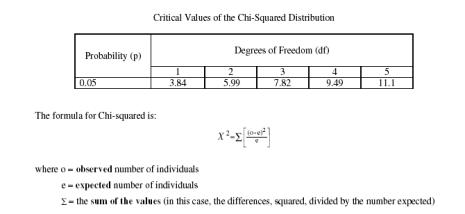
c) Use a Chi-squared test on the F2 generation
data to analyze your prediction of the parental genotypes. Show all your work and explain
the importance of your final answer.
WEEK 5: Molecular Genetics (9%)
Week 5 Concepts:
q
How
do the structures of nucleic acids relate to their functions of information
storage and protein synthesis?
q
What
are the similarities and differences between prokaryotic and eukaryotic
genomes?
q
What
are some mechanisms by which gene expression is regulated in prokaryotes and
eukaryotes?
q
In
what ways can genetic information be altered?
q
What
are some effects of these alterations?
q
What
is the structure of viruses?
q
What
are the major steps in viral reproduction?
q
How
do viruses transfer genetic material between cells?
q
What
are some current recombinant technologies?
q
What
are some practical applications of nucleic acid technology?
q
What
legal and ethical problems may arise from these applications?
Week 5 Vocabulary:
-DNA
-RNA
-Bacteriophage
-Virus
-Double Helix
-Complementary Base Pairs
-Adenine, Cytosine, Thymine, Guanine
-Template Strand
-DNA Polymerase I and III
-DNA Helicase
-Topoisomerase (Gyrase)
-Single Stranded Binding Proteins
-DNA Ligase
-Mutagens
-Genome
-Chromatin
-Histones
-Nucleosomes
-Plasmid
-Recombinant DNA
-Restriction Enzymes
-mRNA, tRNA, rRNA
-Ribosome
-Promoter
-Termination Signal
-RNA Polymerase
-Polypeptide
-Transcription
-Translation
-Codon
-Degenerate
-Introns
-Exons
-Nucleolus
-Aminoacyl attachment site
-Anticodon
-P site and A site (on a ribosome)
-Release Factor
-Operon
-Regulatory Proteins
-Enhancers
-Clone
-Retrovirus
-Lytic Cycle
-Lysogenic cycle
-Transduction
Week 5 Multiple Choice Questions:
1.
According to the Jacob-Monod model of the lac operon, the regulator gene does
which of the following?
(A)
Specifies the amino acid sequence of the enzyme (D) Controls
the activity of histones
(B) Determines
whether promoter genes will be translated (E) Produces corepressor substances
(C) Directs
the synthesis of a repressor protein
2. Once transcribed, eukaryotic mRNA typically
undergoes substantial alteration that results primarily from
(A) excision
of introns (D) fusion into circular forms known as plasmids
(B) linkage
into histone molecules (E) union with ribosomes
(C) fusion
with other newly transcribed mRNA to form larger translatable units
3. Transfer RNA is a molecule that serves to
bring together specific
(A)
Anticodons and rRNA molecules (D) Amino acids and rRNA molecules
(B) Amino
acids and mRNA codons (E) Proteins and mRNA codons
(C) Proteins
and anticodons
4. The nitrogenous base, adenine, is found in
which of three of the following?
(A)
Proteins, chlorophyll, and vitamin A (D) Proteins, ATP, and DNA
(B) ATP,
DNA, and RNA (E) Chlorophyll, ATP, and DNA
(C)
Proteins, carbohydrates, and ATP
5. Which of the following are found in viruses?
(A)
Chloroplasts (B) Ribosomes (C)
Mitochondria (D) Nucleic acid (E) Golgi bodies
6. The enzyme that is found in retroviruses and
that is required for the synthesis of DNA from RNA is
(A) DNA
polymerase III (D) RNA polymerase
(B)
Restriction endonuclease (E) Reverse transcriptase
(C)
Dehydrogenase
7. In DNA replication, DNA polymerase catalyzes
the reaction in which
(A) the
double helix unwinds
(B) the
sugar-phosphate bonds of each strand are broken
(C) a
phosphate group is added to the 3’-carbon or 5’-carbon of ribose
(D) a
nucleotide with a base complementary to the base on the template strand is
added to the new DNA
(E) the two
nucleotide strands come together and intertwine to form a double helix
8. In order for a bacterium to produce a
eukaryotic protein, which of the following must first be isolated from a
eukaryotic cell prior to cloning?
(A) The
protein’s primary RNA transcript from the nucleus
(B) The
protein’s mRNA from the cytoplasm
(C) The
protein from the rough endoplasmic reticulum
(D) The
introns from the segment of DNA that codes for the protein
(E) The
segments of DNA that control transcription for this protein
9. Which of the following substances is found
in RNA molecules but not in DNA molecules?
(A) Adenine (B)
Phosphorus (C) Thymine (D) Deoxyribose (E) Uracil
10. All of the following enzymes are involved in
the replicative process of DNA EXCEPT
(A) DNA
helicase (C) DNA polymerase (E) DNA ligase
(B) RNA
polymerase (D) RNA primer
11. DNA contains all of the following molecules
EXCEPT
(A) adenine (B)
guanine (C) deoxyribose (D) phosphate (E) uracil
12. All of the following are examples of
chromosomal aberrations or mutations EXCEPT
(A) frame shift (B)
deletion (C) sex linkage (D) translocation (E) inversion
13. The length of DNA molecules is measured in
base pairs. The base composition of DNA
varies from one species to another.
Which of the following ratios would you expect to remain constant in the
DNA?
(A) cytosine/adenine (D)
pyrimidine/purine
(B) adenine/thymine (E)
guanine/deoxyribose
(C) thymine/guanine
Week 5 Essay Questions:
1. Describe the production and processing of a
protein that will be exported from a eukaryotic cell. Begin with the separation
of the messenger RNA from the DNA template and end with the release of the
protein at the plasma membrane.
2. Describe the operon hypothesis and discuss
how it explains the control of messenger RNA production and the regulation of
protein synthesis in bacterial cells.
3. Describe the biochemical composition,
structure, and replication of DNA. Discuss how recombinant DNA techniques may
be used to correct a point mutation.
4. Describe the steps of protein synthesis,
beginning with the attachments of a messenger RNA molecule to the small subunit
of a ribosome and ending with the release of the polypeptide from the ribosome.
Include in your answer a discussion of how the different types of RNA function
in this process.
5. The
diagram below shows a segment of DNA with a total length of 4,900 base pairs.
The arrows indicate reaction sites for restriction enzymes (enzyme X and enzyme
Y).

a) Explain how the principles of gel electrophoresis
allow for the separation of DNA fragments.
b) Describe the results
you would expect from the electrophoretic separation of fragments from the
following treatments of the DNA segment above. Assume that the digestions
occurred under appropriate conditions and went to completion.
I. DNA digested with only enzyme X
II. DNA digested with only enzyme Y
III. DNA digested with enzyme X and enzyme Y
combined
IV. Undigested DNA
c)
Explain both of the following.
(1) The
mechanism of action of restriction enzymes.
(2) The different results
you would expect if a mutation occurred at the recognition site for enzyme Y.
6. The human genome illustrates both continuity
and change.
a) Describe
the essential features of two of the procedures/techniques below. For each of the procedures/techniques you
describe, explain how its application contributes to understanding genetics.
·
The
use of a bacterial plasmid to clone and sequence a human gene.
·
Polymerase
Chain Reaction (PCR)
·
Restriction
fragment length polymorphism (RFLP) analysis
b) All
humans are nearly identical genetically in coding sequences and have many
proteins that are identical in structure and function. Nevertheless, each human has a unique DNA
fingerprint. Explain this apparent
contradiction.
WEEK 6: Evolutionary Biology (8%)
Week 6 Concepts:
q
What are the current biological models for the origins
of biological macromolecules?
q
What are the current models for the origins of
prokaryotic and eukaryotic cells?
q
What types of evidence support an evolutionary view of
life?
q
What is the role of natural selection in the process of
evolution?
q
How are heredity and natural selection involved in the
process of evolution?
q
What mechanisms account for speciation and
macroevolution?
q
What different patterns of evolution have been
identified and what mechanisms are responsible for each of these patterns?
Week 6 Vocabulary:
-Reducing
Atmosphere
-Proteinoids
-Chemical Selection
-Heterotrophs
-Autotrophs
-Chemosynthesic
-Artificial Selection
-Fossil
-Analogous Structures/Organs
-Homologous Structures/Organs
-Vestigial Structures
-Adaptive Radiation
-Endemic Species
-Adaptation
-Hardy Weinberg Principle
-Natural Selection
-Fitness
-Stabilizing selection
-Directional selection
-Disruptive Selection
-Genetic Drift
-Founder Effect
-Allopatric
Speciation
-Sympatric
Speciation
Week 6 Multiple Choice Questions:
1. The introduction of antibiotics such as
penicillin several years ago was immediately effective in combating infections
caused by Staphylococcus in 1958.
However, there were several outbreaks of staphylococcal infections. People with the infections did not respond
to treatment with any of the antibiotics and there was a large number of
deaths. The best explanation for this
situation is that
(A) The
bacteria reproduced in hosts that were not contaminated with antibiotics
(B) The
bacteria from other hosts such as birds, cats, and dogs migrated into human
hosts
(C) The
bacteria exposed to nonlethal doses of antibiotics quickly learned to avoid
them
(D) Each
generation of bacteria acquired the ability to use antibiotics as nutrients
(E)
Antibiotic-resistant bacteria survived and multiplied and these were the
forms causing the infections
2. The external similarity of dolphins to
sharks is an example of
(A)
Convergent evolution (C) Divergent evolution (E) Behavioral isolation
(B)
Geographic isolation (D) Adaptive radiation
Questions
3-6: Use one of the following terms to
match to the definition.
(A) Founder
effect (C) Kin selection (E)
Competitive exclusion
(B) Adaptive
radiation (D) Convergent evolution
3. The evolution of several species from a
single species, each occupying a different niche.
4. The survival, through apparently altruistic
behavior, of related individuals with common alleles.
5. The establishment of a genetically unique
population through genetic drift
6. The independent development of similarities
between unrelated groups resulting from adaptation to similar environments
7. The wing of a
bat, the flipper of a whale, and the forelimb of a horse appear very different, yet detailed studies reveal the
presence of the same basic bone pattern.
These structures are examples of
(A)
analogous structures (C) homologous structures (E) vestigial
structures
(B) balanced
polymorphism (D) convergent evolution
8. S. L. Miller’s classic experiment
demonstrated that a discharge of sparks through a mixture of gases could result
in the formation of a large variety of organic compounds. All of the following gases were used in this
experiment EXCEPT
(A) hydrogen
(B) methane (C) ammonia (D) oxygen (E) water vapor
9. In a population that is in Hardy-Weinberg
equilibrium, the frequency of a recessive allele for a certain hereditary trait
is 0.20. What percentage of the
individuals in the next generation would be expected to show the dominant
trait?
(A) 8% (B) 16% (C) 32% (D) 64% (E) 96%
10. The bones of a human arm are homologous to
structures in all of the following EXCEPT a
(A) whale
flipper (B) bat wing (C) butterfly wing (D) bird wing
(E) frog forelimb
Question 11 &
12
In a certain flock of sheep, 4 percent of the population
has black wool and 96 percent has white wool.
Assume that the population is in Hardy Weinberg Equilibrium
11. If black wool is a recessive trait, what
percentage of the population is heterozygous for the trait?
(A) 4% (B) 20% (C) 32% (D) 64% (E) 80%
12. What percentage of the population is
homozygous for white wool?
(A) 20% (B)
40% (C) 64% (D) 80% (E) 96%
13. All of the following conditions would result
in a change in the frequency of a specific allele in a population EXCEPT
(A)
Selection against the recessive phenotype (D) Selection
against the dominant phenotype
(B) Genetic
drift (E) Random mating in a large population
(C) Mutation
of the dominant allele to the recessive allele
14. In a population at equilibrium, thousands of
eggs and hundreds of tadpoles are produced by a single pair of frogs. About how many offspring will live to
maturity and reproduce?
(A) 0 (B) 2 (C) 10-20 (D) 100 (E) more than 100
15. A new species of organism has evolved when
(A) The
climate of a population’s area has changed greatly
(B) A
population can no longer interbreed under natural conditions with other closely
related organisms
(C)
Variation has occurred within the species due to mutations
(D)
Population has been recently isolated from the rest of the species by a
geographic barrier
Week 6 Essay Questions:
1.
Describe the special relationship between the two terms in each of the
following pairs.
a.
Convergent evolution of organisms and Australia c. Blood groups and genetic drift
b. Birds of
prey and DDT
2. Describe the modern theory of evolution and
discuss how it is supported by evidence from two of the following areas.
a. population genetics b. molecular biology c.
comparative anatomy and embryology
3. Genetic variation is the raw material for
evolution.
a. Explain three
cellular/molecular mechanisms that introduce variation into the gene pool of a
plant or animal population.
b. Explain the evolutionary mechanisms that can change
the composition of the gene pool.
4. Do the following with reference to the
Hardy-Weinberg model.
a. Indicate the conditions under which
allelic frequencies (p and q) remain constant from one generation to the next.
b. Calculate, showing all work, the frequencies of the
alleles and the frequencies of the genotypes in a population of 100,000
rabbits, of which 25,000 are white and 75,000 are agouti. (In rabbits the white
color is due to a recessive allele, w, and the agouti is due to a dominant all,
W.)
c. If the homozygous dominant condition
were to become lethal, what would happen to the allelic and genotypic
frequencies in the rabbit population after two generations?
5.
Evolution is one of the major unifying themes of modern biology.
a.
Explain the mechanisms that lead to evolutionary change.
b.
Describe
how scientists use each of the following as evidence for evolution.
i. Bacterial resistance to antibodies ii. Comparative
biochemistry iii. The fossil record.
WEEK 7: Diversity of Organisms (8%)
Week 7 Concepts:
q
What
are the major body plans of plants and animals?
q
What
are representative organisms from the Bacteria, Archaea, and Eukarya?
q
What
are representative members of the major animal phyla and plant divisions?
q
What
are the distinguishing characteristics of each group (domains, kingdoms, and
the major phyla and divisions of animals and plants)?
q
What
is some evidence that organisms are related to each other?
q
How
do scientists study evolutionary relationships among organisms?
q
How
is this information used in classification or organisms?
Week 7 Vocabulary:
-Asexual reproduction
-Parthenogenesis
-Hermaphroditism
-Altruism
-Binomial Nomenclature
-Kingdom, Phylum, Class, Order, Family, Genus, Species
-Taxon
-Phylogeny
-Divergent evolution
-Convergent evolution
-Vestigial structures
-Homologous structures
-Monophyletic
-Polyphyletic
-Kingdoms -> Animalia, Fungi, Prokaryotae, Protista, Plantae
-Domains -> Archaea, Eukarya, Bacteria
-Saprobes
-Transduction
-Transformation
-Conjugation
-Obligate Anaerobes
-Facultative Anaerobes
-Autotrophs
-Chemosynthesis
-Heterotrophs
-Nitrifying Bacteria
-Legumes
-Parasitism
-Commensalism
-Mutualism
-Algae
-Phytoplankton
-Mycorrhiza
-Epiphytes
-Lichen
Week 7 Multiple Choice Questions:
Questions
1-4: From the fields of study listed
below, choose the field that has provided each of the following pieces of
evidence that biological evolution has occurred.
(A)
Comparative biochemistry (D) Comparative anatomy
(B)
Comparative embryology (E) Geographical distribution
(C)
Paleontology
1. Archaeopteryx is an extinct feathered
reptile.
2. Peripatus has claws like an insect and
paired nephridia like a segmented worm.
3. Most human diabetics can use insulin derived
from either pigs or from humans.
4. During early development, a human fetus has
a tail and gill arches.
5. All members of which of the following groups
have the greatest number of characteristics in common?
(A) Class (B) Order (C) Family (D) Genus (E) Phylum
6. Some varieties of Neusseria gonorrheae
are now resistant to penicillin. These
varieties of bacteria most probably developed as a result of
(A) Natural
selection (C) Hybrid vigor (E) coevolution
(B) Adaptive
radiation (D) convergent evolution
7. The differences in cricket calls among
sympatric species of crickets are examples of
(A) habitat isolation (C)
temporal isolation (E) physiological isolation
(B)
behavioral isolation (D)
geographic isolation
8. Which of the following is probably the best
explanation for the fact that Antarctic penguins cannot fly, although there is
evidence that millions of years ago their ancestors could do so?
(A) Penguins
live on land and feed in the water.
(B) The
Antarctic home of penguins is flat and barren therefore there is no place to
fly.
(C)
Ancestral penguins without large wings were better able to swim and feed
in the water, therefore they passed their genes for shorter wing structure on
to their offspring.
(D)
Ancestral penguins did not use their wings therefore today’s penguins
have only tiny nonfunctional wings.
(E) The cold and wind of Antarctica make flight
impossible, therefore penguins that live there have the best ability to fly.
9. Members of the kingdom Fungi generally
differ from members of the kingdom Plantae in that
(A) have
cell walls (C) are multicellular (E) are
heterotrophic
(B) are both
aquatic and terrestrial (D) are eukaryotic
10. A species of malaria-carrying mosquito lives
in a forest in which two species of monkeys, A and B, coexist. Species A is immune to malaria but species B
is not. The malaria-carrying mosquito
is the chief food for a particular kind of bird in the forest. If all of these birds are eliminated
suddenly by hunters, which of the following would be the immediate observable
consequence?
(A)
Increased mortality in monkey species A
(B)
Increased mortality in monkey species B
(C)
Increased mortality in the malaria-carrying mosquitoes
(D)
Emergence of malaria-resistant strains in monkey species B
(E)
Emergence of malaria-resistant strains in monkey species A
11. One of the most pronounced differences
between animal and plant cells is that
(A) animal
cells alone have one or more large vacuoles
(B) animal
cells alone have a nucleolus
(C) animal
cells alone have their nuclear chromatin attached to the spindle fibers during
mitosis
(D) plant
cells alone have rough endoplasmic reticulum
(E) plant
cells alone have relatively thick rigid cell walls
12.
Which of the following statements about a typical aquatic angiosperm is
correct?
(A) It forms
spines (D) It has fleshly leaves for water storage
(B) It has
extensive taproot systems (E) It has stomata in sunken cavities
(C) It has
stomata on the upper leaf surfaces
13.
The ancestors of land plants most likely resembled modern day members of the
(A)
Cyanobacteria (blue-green algae) (D) Rhodophyta (red algae)
(B)
Chlorophyta (green algae) (E) Phaeophyta (brown algae)
(C) Chrysophyta
(diatoms and golden-brown algae)
14. Which of the following features of
angiosperms has probably contributed most to their evolutionary success
relative to all other land plant groups?
(A) Phloem (C) Cutinized aerial surfaces (E)
Flowers and fruits
(B) True
leaves and roots (D) Xylem
Week 7 Essay Questions:
1. Select two of the following three pairs and
discuss the evolutionary relationships between the two members of each pair you
have chosen. In your discussion include structural adaptations and their
functional significance.
PAIR A: PAIR B: PAIR C:
green algae prokaryotes amphibians
vascular plants eukaryotes reptiles
2. Describe the process of speciation. Include in your discussion the factors that
may contribute to the maintenance of genetic isolation.
3. Angiosperms (flowering plants) and
vertebrates obtain nutrients from their environment in different ways:
a. Discuss the type of nutrition and the nutritional
requirements of angiosperms and vertebrates.
b. Describe 2 structural adaptations in angiosperms
for obtaining nutrients from the environment. Relate structure to function.
c.
Interdependence in nature is evident in symbiosis. Explain two symbiotic
relationships that aid in nutrient uptake, using examples from angiosperms
and/or vertebrates. (Both examples may
be angiosperms, both may be vertebrates, or one may be from each group.)
4. Define, discuss, and give an example of each
of the following close interactions of species.
a)
Predator-prey relationships b) Commensalism c) Mutualism
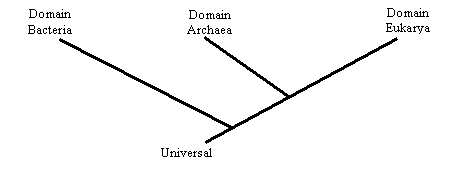 5. Scientists recently have proposed a reorganization of the
phylogenetic system of classification to include the domain, a new taxonomic
category higher (more inclusive) than the Kingdom category, as shown in the
following diagram.
5. Scientists recently have proposed a reorganization of the
phylogenetic system of classification to include the domain, a new taxonomic
category higher (more inclusive) than the Kingdom category, as shown in the
following diagram.
a) Describe
how this classification scheme presents different conclusions about the
relationships among living organisms than those presented by the previous
five-kingdom system of classification describe three kinds of evidence that
were used to develop the taxonomic scheme above, and explain how this evidence
was used. The evidence may be structural, physiological, molecular, and/or
genetic.
b) Describe four of the characteristics of the
universal ancestor.
WEEK 8: Plant Structures and Growth (8%)
Week 8 Concepts:
q
How
does the organization of cells, tissues, and organs determine structure and
function in plant systems?
q
How
are structure and function related in the various organ systems?
q
What
adaptive features have contributed to the success of various plants on land?
Week 8 Vocabulary:
-seed coat
-dicotyledons
-apical meristem
-root cap
-zone of elongation
-epidermis
-root hairs
-cortex
-root hairs
-fibrous root system
-cuticle
-turgor
-stomata (stoma)
-guard cells
-palisade mesophyll
-vascular cambium
-secondary vascular tissues
-secondary xylem
-wood
-secondary phloem
-cork cambium
-cork/outer bark
-endosperm
-coleoptile
-capillarity
-leaching
-Casparian Strip
-plasmodesmata
-lignin
-tracheids
-pits
-vessels/vessel elements
-sapwood
-root pressure
-transpiration pull-water cohesion mechanism
-sieve tube elements
-sieve tubes
-companion cell
-mass flow/pressure flow model
Week 8 Multiple Choice Questions:
1. One of the most pronounced differences
between animal and plant cells is that
(A) animal
cells alone have one or more large vacuoles
(B) animal
cells alone have a nucleolus
(C) animal
cells alone have their nuclear chromatin attached to the spindle fibers during
mitosis
(D) plant
cells alone have rough endoplasmic reticulum
(E) plant
cells alone have relatively thick rigid cell walls
2. Which of the following is LEAST likely to be
a factor in the movement of water through a terrestrial plant?
(A) The
cohesion of water (D) The influence of gibberellin on cell
expansion
(B)
Capillary action (E) The evaporation of water from the leaves
(C) Root
pressure
3. Root hairs are extensions of which of the
following kinds of cells?
(A) Cortical (B)
Xylem (C) Phloem (D) Epidermal (E) Meristematic
4. Girdling of a tree by completely removing a
ring of bark most directly affects the process of
(A)
Translocation (C) Transpiration (E) Cellular respiration
(B)
Photosynthesis (D) Countercurrent exchange
5. All of the following are found in the cells
of higher plants EXCEPT
(A) Plasma
Membrane (B) Cell Wall
(C) Chloroplast (D)
Ribosome (E) Centriole
6. A plant that has a stem with scattered
vascular bundles, leaves with parallel venation, and seeds with a single
cotyledon is probably a
(A) Pine (B)
Moss (C) Corn Plant (D) Bean Plant (E) Liverwort
7. Which of the following statements about
xylem and phloem is correct?
(A) Both are
produced as secondary growth by vascular cambium (D) Both have
companion cells
(B) Both
conduct glucose in the plant (E)
Both are found in bryophytes (C) Both actively move fluids up and down stems
8.
Which of the following factors is most important in the movement of water up a
tall tree?
(A)
Guttation (C) Capillarity in the phloem (E) Active transport in the xylem
(B) Air
Pressure (D) Transpiration
9. Plants with floral parts that occur in
multiples of three, have scattered vascular bundles, leaves with parallel
veins, and have one cotyledon are
(A) Mosses (B) Liverworts (C) Trees (D) Monocots (E) Dicots
10. Bryophytes generally differ from
tracheophytes in that bryophytes have
(A) a
protective layer around their gametes (D) conducting tissues
(B) stomates
in leaf surfaces (E) waxy cuticles on their outer surface
(C)
water-borne motile sperm
Week 8 Essay Questions:
1. Relate the structure of an angiosperm leaf
to each of the following:
a.
Adaptations for photosynthesis and food storage.
b.
Adaptations for food translocation and water transport.
c.
Specialized adaptations to a desert environment.
2. Describe the structure of a bean seed and
discuss its germination to the seedling stage. Include in your essay hormonal
controls, structural changes, and tissue differentiation.
3. Trace the pathway in a flowering plant as
the water moves from the soil through the tissues of the root, stem, and leaves
to the atmosphere. Explain the mechanisms involved in conducting water through
these tissues.
4. Discuss the adaptations that enable flowering
plants to overcome the following problems associated with life on land.
a. The
absence of an aquatic environment for reproduction.
b. The
absence of an aquatic environment to support the plant body.
c.
Dehydration of the plant.
5. Angiosperms (flowering plants) and
vertebrates obtain nutrients from their environment in different ways.
a. Discuss
the type of nutrition and the nutritional requirements of angiosperms and
vertebrates.
b. Describe
2 structural adaptations in angiosperms for obtaining nutrients from the
environment. Relate structure to function.
c. Interdependence in nature is evident in
symbiosis. Explain two symbiotic relationships that aid in nutrient uptake,
using examples from angiosperms and/or vertebrates. (Both examples may be
angiosperms, both may be vertebrates, or one may be from each group.
WEEK 9: Plant Reproduction and Behavior (8%)
Week 9 Concepts:
q What patterns of
reproduction and development are round in plants and how are they regulated?
q What is the adaptive
significance of alternation of generations in the major groups of plants?
q What are the responses of
plants to environmental cues, and how do hormones mediate them?
Week 9 Vocabulary:
-Alternation of Generations
-Spores
-Sporophyte
-Gametophyte
-Embryophytes
-Auxin
-Gibberellins
-Cytokinins
-Abscisic Acid
-Ethylene
-Apical Dominance
-Gravitropism
-Thigmotropism
-Phototropism
-Amyloplasts
-Short Day Plant
-Long Day Plants
-Critical daylength
-Senescence
-Sepals
-Stamen
-Anthers
-Stigma
-Style
-Ovary
-Ovules
-Pollen grains
-Self pollination
-Pollen tube
-Sperm nuclei
-Micropyle
-Sperm nuclei
-Double Fertilization
-Endosperm
-Seed coat
-Fruit
-Germinate
-Plant grafting
Week 9 Multiple Choice Questions:
1. Which of the following statements about a
typical aquatic angiosperm is correct?
(A) It forms
spines (D) It has fleshly leaves for water storage
(B) It has
extensive taproot systems (E) It has stomata in sunken cavities
(C) It has
stomata on the upper leaf surfaces
Questions
2-5: Use the terms below to answer questions 2-5
(A)
Angiosperms (B) Gymnosperms (C) Mosses (D)
Ferns (E) Green algae
2. These represent the most primitive
tracheophytes.
3. Fruit development assists in seed dispersal.
4. These produce naked seeds.
5. The sporophyte generation consists of a
foot, a stalk, and a single sporangium that remains attached to the dominant
gametophyte.
6. Phototropism in plants is mediated by what
plant growth substance?
(A) Auxin (B)
Colchicine (C) Chlorophyll (D) Ethylene (E) Lenticels
7. During germination in most angiosperm seeds,
food for the growing embryo is provided by the
(A) microgametophyte (B) female gametophyte (C) endosperm (D) hypocotyl (E)
ovary
8. A response of an organism to seasonal change
is
(A) phototropism
(B) photoperiodism (C)
circadian rhythm (D) photolysis (E) the biological clock
9. Flowering in plants such as tobacco and
cocklebur and the germination of certain lettuce seeds are induced primarily by
(A)
Photoperiodism (C) Temperature (E) Negative feedback
(B)
Circadian rhythms (D) Lunar phases
10. In angiosperms, the endosperm functions in
(A) pollen
formation (D) fruit formation
(B) seed
coat formation (E) direction of the growth of the pollen tube
(C)
nourishment of the embryo
11. Which of the following features of
angiosperms has probably contributed most to their evolutionary success
relative to all other land plant groups?
(A) Phloem (D) Cutinized aerial surfaces
(B) Flowers
and fruits (E) True leaves and roots
(C) Xylem
12. The result of meiosis in angiosperms is the
production of
(A) gametes (C) a haploid sporophyte (E) A diploid sporophyte
(B) A diploid gametophyte (D) Haploid
megaspores and microspores
Week 9 Essay Questions:
1. In the life cycles of a fern and a flowering
plant, compare and contrast each of the following:
a.
The gametophyte generation. b. Sperm transport and fertilization. c. Embryo protection.
2. Define the following plant responses and
explain the mechanism of control for each. Cite experimental evidence.
a.
Phototropism b. Photoperiodism
3. Describe the effects of plant hormones on
plant growth and development. Design an experiment to demonstrate the effect of
one of these plant hormones on plant growth and development
4. Discuss the adaptations enable flowering
plants to overcome the following problems associated with life on land.
a.
The absence of an aquatic environment for reproduction.
b.
The
absence of an aquatic environment to support the plant body.
c.
Dehydration of the plant.
5. Describe the structure of a bean seed and
discuss its germination to the seedling stage,
Include in your essay hormonal controls, structural changes, and tissue
differentiation.
WEEK 10: Structure and Function in Animals (8%)
Week 10 Concepts:
q What patterns of
reproduction and development are found in animals and how are they regulated?
q How does the organization of
cells, tissues, and organs determine structure and function in animal systems?
q How are structure and
function related in the various organ systems?
q How do the organ systems of
animals interact?
q What adaptive features have
contributed to the success of various animals on land?
q What are the responses of
animals to environmental cues and how do hormones mediate them?
Week 10 Vocabulary:
-Herbivore
-Carnivore
-Omnivore
-Vitamin
-Gizzard and Crop
-Stomach
-Caecum
-Saliva (salivary amylase)
-HCl
-Pepsin
-Trypsin
-Bile
-Duodenum / Small Intestine
-Colon / Large Intestine
-Symbiotic Bacteria
-Villi
-Ruminants
-Homeotherms
-Poikilotherms
-Gills
-Countercurrent Exchange
-Alveoli
-Diaphragm
-Tracheae
-Spiracles
-Hemoglobin
-Carbonic anhydrase
-Coelom
-Gastrovascular cavity
-Open vs. Closed Circulatory Systems
-Capillaries
-Veins and Arteries
-Systolic and Diastolic Pressures
-Vasodilation
-Adrenal Glands
-Epinephrine (aka adrenalin)
-Thrombin
-Urea
-Uric Acid
-Hypotonic, Hypertonic, Isotonic
-Flame Cells
-Nephridium
-Malphigian Tubules
-Nephrons
-Ureter
-Vasopressin (aka antidiuretic hormone or ADH)
-Aldosterone
-Renin
-Ovaries
-Ovulation
-Uterus
-Vas deferens
-Testes
-Testosterone
-Luteinizing Hormone (LH)
-Follicle Stimulating Hormone (FHS)
-Human Chorionic Gonadotropin (HCG)
-Corpus Luteum
-Oxytocin
-Blastulation
-Gastrulation
-Cleavage
-Blastocoel
-Ectoderm
-Endoderm
-Mesoderm
-Neurulation
Week 10 Multiple Choice Questions:
1. During development, individual cells of the
same organism begin to produce different proteins because
(A) The cells have different numbers of chromosomes
(D) Not all cells can synthesize proteins
(B) The cells have different kinds and amounts of
DNA (E) Specific genes are activated in the cells
(C) Genes are permanently lost as somatic cells
differentiate
2. Hormones stimulate the uterine lining to
thicken in preparation for
(A) Ovulation (B)
Fertilization (C) Lactation
(D) Menstruation (E) Implantation
3. Which of the following is LEAST involved in
respiratory gas exchange in the frog?
(A) Lining of the mouth (B) Lungs (C) Skin (D)
Large intestine (E) Blood
4. Fats are emulsified by which of the
following substances synthesized by the liver?
(A)
Cholesterol (B) Hydrochloric Acid (C) Lipase (D)
Bile salts (E) Glycerol
5. All of the following processes occur in the
nephron EXCEPT
(A) tubular secretion (D) glomerular filtration
(B) erythrocyte formation (E) cellular respiration
(C) selective reabsorption
6. All of the following statements about the
placenta are correct EXCEPT:
(A) It permits an interchange of CO2 and O2 between
material and fetal blood.
(B) It forms from tissues of both the embryo and the
uterus
(C) It permits the mixing of maternal and fetal
blood
(D) It functions as an endocrine gland.
(E) It provides the embryo with a way to dispose of
its nitrogenous waste products.
7. Which of the following is most directly
influenced by antidiuretic hormone (ADH)?
(A) The rate of glomerular filtration
(B) Countercurrent exchange in the loop of Henle
(C) Reabsorption of water from the collecting duct
(D) Reabsporption of sodium ions from the distal
convoluted tubule
(E) Secretion of potassium and hydrogen ions into
the proximal convoluted tubule.
8. Which of the following describes the correct
sequence of stages during embryogenesis?
(A) Cleavage, blastula formation, gastrulation (D) Cleavage, gastrulation,
blastula formation
(B) Blastula formation, gastrulation, cleavage (E) Blastula formation,
cleavage, gastrulation
(C) Gastrulation, cleavage, blastula formation
9. Which of the following is most effective in
lowering the body temperature of a mammal?
(A) Erection
of the fur (D) Involuntary contraction of skeletal muscles
(B)
Increased epinephrine (adrenaline secretion) (E)
Increased flow of blood to the skin
(C)
Increased metabolic activity
10. In humans primary oocytes are located in the
(A) cervix (B)
uterus (C) corpus luteum (D) oviduct
(E) ovary
11. Which of the
following is LEAST likely to be associated with diabetes mellitus?
(A) insulin
receptors are insensitive to insulin
(B)
Urinalysis indicates a high concentration of sugar in the urine
(C)
Pancreatic islet cells are destroyed
(D) Liver
cells absorb sugar from the blood at a rate that is greater than normal
(E) Muscle
cells readily oxidize fats and proteins
12. The function of the acrosome of the sperm is
to
(A) Orient
the pattern of the microtubules for motility (D) Carry genetic information
(B) Carry
the enzymes that facilitate fertilization (E) Provide energy for movement
(C) Regulate
protein synthesis in the sperm
Questions
13-16: Use the choices below to answer the
following questions
(A) LH
(Luteinizing Hormone) (D) FSH (Follicle Stimulating Hormone)
(B)
Testosterone (E) Adrenalin
(C)
Progesterone
13. A steroid hormone, produced by the placenta,
which functions in maintaining the uterine lining during pregnancy.
14. A hormone that brings about the formation of
the corpus luteum
15. A pituitary hormone that causes ovulation to
occur
16. Primary hormone produced in male gonadal
tissue.
17. If an invertebrate possesses malphigian
tubules, a tracheal breathing system, and an open circulatory system it is most
likely to be:
(A) a snail (B)
a sponge (C) a butterfly (D) an earthworm (E) a flatworm
18. The moist skin of earthworms, the lenticels
of plants, and the spiracles of grasshoppers are all associated with the
process of:
(A)
excretion (B) respiration (C)
circulation (D) digestion (E) reproduction
19. Which structure in an annelid has a function
similar to that of the alveoli of a human?
(A)
Malphigian tubules (B)
Nephridia (C) Flame Cells (D) Gills (E) Skin
20.
Human identical twins develop when
(A) Two
identical eggs are fertilized
(B) A single
egg is fertilized by two sperm
(C) Two
different eggs are fertilized by two different sperm
(D) The
embryo splits and each portion continues to develop
(E) A
diploid egg is fertilized by a diploid ovum
Week 10 Essay Questions:
1. The action of organs and organ systems must
be coordinated. Discuss the interaction of factors involved in controlling
heart rate and breathing rate in mammals during periods of relaxation and
periods of stress.
2. Discuss the intake, transport, exchange, and
release of gases in mammals.
3. Describe the structure and function of the
stomach, pancreas, and small intestine as digestive and endocrine organs in the
human. (For each organ, include the relevant cell types and their functions.)
4. Describe the structure and function of the
mammalian kidney. Include a discussion of the regulation of water balance by
kidney and hormonal interaction.
5. Describe the processes of fat and protein
digestion and product absorption as they occur in the human stomach and small
intestine. Include a discussion of the enzymatic reactions involved.
6. Describe negative and positive feedback
loops, and discuss how feedback mechanisms regulate each of the following:
a. The menstrual cycle in a nonpregnant human
female. b. Blood glucose
levels in humans.
7. Many physiological changes occur during
exercise.
a. Design a
controlled experiment to test the hypothesis that an exercise session causes
short-term increases in heart rate and breathing rate in humans.
b. Explain
how at least three organ systems are affected by this increased physical
activity and discuss interactions among these systems.
8. Feedback mechanisms are used by organisms to
maintain the steady-state physiological condition known as homeostasis. Choose three of the following and for each,
explain how feedback mechanisms maintain homeostasis.
a. Blood glucose concentration d. Calcium ion concentration in blood
b. Body
temperature in mammals e. Osmolarity of the blood
c. Pulse
rate in mammals
WEEK 11: Structure and Function in Animals (8%)
Week 11 Concepts:
*Same
as Week 10
Week 11 Vocabulary:
-Radial vs. Bilateral Symmetry
-Endoderm, ectoderm, mesoderm
-Coelom
-Porifera
-Cnidaria
-Platyhelminthes (flatworms, flame cells)
-Nematoda
-Annelida (nephridia)
-Mollusca
-Arthropods (chitin, malphigian tubules, tracheae)
-Echinodermata
-Chordata (notochord, pharyngeal gill slits)
-Amniotic eggs (amnion, yolk sac, chorion)
-Deuterostomes
-Protostomes
-Mast cells
-Complement
-Interferons
-B cells and T cells
-Antibody
-Antigen
-Macrophage
-Humoral vs. Cell Mediated Immunity
-Neuron
-Synapse
-Resting and Action Potential
-Myelin
-Nodes of Ranvier
-Acetylcholine
-Dopamine
-Serotonin
-Reflex Arc
-Smooth, Cardiac, and Skeletal Muscle
-Sarcomere
-Sarcolemma
-Myofibrils
-Sliding Filament Theory
-Actin, Myosin, Troponin, and Tropomyosin
-Endocrine gland
-Thyroxin
-Calcitonin
-Parathyroid Hormone
-Fight or Flight Response
-Circadian Rhythm
-Imprinting
-Innate Behavior
-Habituation
-Classical Conditioning
Week 11 Multiple Choice Questions:
1.
Which of the following sequences describes the passage of a nerve impulse
through a simple reflex arc in humans?
(A)
Receptor, sensory neuron, motor neuron, association neuron, effector
(B)
Receptor, motor neuron, association neuron, sensory neuron, effector
(C) Receptor,
sensory neuron, association neuron, motor neuron, effector
(D)
Effector, motor neuron, association neuron, sensory neuron, receptor
(E)
Receptor, association neuron, sensory neuron, motor neuron, effector
2.
Vertebrates became truly terrestrial with the development of the amniotic egg
in
(A) Fish (B)
Amphibians (C) Reptiles (D) Birds (E) Mammals
3.
All of the following are deuterostomes EXCEPT
(A) Mollusks (B) Reptiles (C) Amphibians (D) Echinoderms (E) Mammals
4.
The “all-or-none” law, as it applies to impulse transmission, states which of
the following?
(A) If a
stimulus is applied, either all neurons fire or none do
(B) A
stimulus causes either all the sodium to leak into the neuronal membrane or
none of it
(C) Either
all neurons develop an action potential upon stimulation or none do
(D) If a
stimulus is at or above the threshold an action potential will be generated, if
not, then the neuron will not fire
(E) Either
all neurons will be repolarized or none will be
5.
Many birds, insects, and terrestrial reptiles excrete nitrogenous wastes in the
form of uric acid that
(A) Is
synthesized in the kidneys from ammonia and CO2
(B) Forms
crystals that are relatively insoluble and nontoxic
(C) Readily
decomposes on exposure to air
(D) Is
readily excreted through feathers and scales
(E) Can be
recycled and utilized as an additional energy source
6.
All of the following are examples of countercurrent exchange mechanism EXCEPT
(A) Heat
exchange in the limbs of seals and whales (D) Heat exchange in the legs of wading birds
(B) Gas
exchange in the gills of fish (E) Gas exchange in the alveoli of humans
(C) Chloride
transport in the loop of Henle of humans
7.
If young male zebra finches are raised by foster parents of another species,
the Bengalese finch, they will court female Bengalese finches instead of
females of their own species. This
behavior results from which of the following?
(A) Imprinting (B) Habituation (C) Conditioning (D) Reinforcement (E) Pheromones
8. Which of the following offers the best
description of neural transmission across a mammalian synaptic gap?
(A) Neural impulses involve the flow of K+ and NA+
across the gap
(B) Neural impulses travel across the gap as
electrical currents
(C) Neural impulses cause the release of chemicals
that diffuse across the gap
(D) Neural impulses travel across the gap in both
directions
(E) The calcium within the axons and dendrites of
nerves adjacent to a synapse acts as the neurotransmitter
9.
Which of the following is most often associated with the elaborate courtship
rituals conducted by many birds?
(A) Species recognition (D) Migration
(B) Feeding responses (E) Altruism
(C) Kin selection
10. Which of the following would result if the
sodium-potassium pump of a neuron were inoperative?
(A) The movement of chloride ions would produce
action potential
(B) An impulse would travel from the axon to the
dendrites of the neuron
(C) The rate of transmission of the impulse would
greatly increase
(D) The rate of ATP synthesis would increase
(E) An action potential would not occur.
11. A nerve cell sends messages to other cells
by means of membrane-enclosed sacs containing transmitter molecules that fuse
with the nerve cell
(A)
Exocytosis (C) Endocytosis (E)
Active Transport
(B)
Facilitated Diffusion (D)
Phagocytosis
12.
A severe dose of x-ray radiation results in conditions such as anemia, atypical
sperm production, and a depressed immune system because the cells affected
(A) are fully
differentiated (D) are the largest cells in the body
(B) are the
most actively dividing cells in the body (E) contain pigments that reflect radiation
(C) contain
more protein than any other cells in the body
Week 11 Essay
Questions:
1. Biological recognition is important in many
processes at the molecular, cellular, and organismal levels. Select three of
the following, and for each of the three that you have chosen, explain how the
process of recognition occurs and give an example.
a. Organisms
recognize others as members of their own species.
b.
Neurotransmitters are recognized in the synapse.
c. Antigens trigger antibody responses.
d. Nucleic
acids are complementary.
e. Target
cells respond to specific hormones.
2. Beginning at the presynaptic membrane of the
neuromuscular junction, describe the physical and biochemical events involved
in the contraction of a skeletal muscle fiber. Include the structure of the
fiber in your discussion.
3. Describe the following mechanisms of
response to foreign materials in the human body.
a. The antigen-antibody response to a skin graft
from another person.
b. The reactions of the body leading to inflammation
of a wound infected by bacteria.
4. Describe the structure and function of the
reflex arc in higher vertebrates.
Include a description of the cell types and a discussion of the
mechanism of transmission of the impulse.
5. The complexity of structure and function
varies widely across the animal kingdom.
Despite this variation animals exhibit common processes. These include the following:
-transport of materials -response to stimuli
-gas exchange -locomotion
a)
Choose two of the processes above and for each, describe the relevant
structures and how they function to accomplish the process in the following
phyla.
Cnidaria
(e.g. hydra, jellyfish) Annelida
(e.g. earthworm) Chordata
(e.g. mouse)
b)
Explain the adaptive (evolutionary) value(s) of the structural examples you
described in part a.
6. In biological systems, structure and
function are related. Choose three of
the following components of organ systems:
alveolus villus sarcomere
nephron neuron capillary
a) For each component, describe the structure
of the component and explain how that structure is responsible for the function
of that component.
b) For the three components that you chose in
part a, explain how the structure of the component contributes to the
functioning of the organ system to which it belongs.
7. To survive, organisms must be capable of avoiding,
and/or defending against, various types of environmental threats. Respond to each of the following.
a) Describe how adaptive coloration, mimicry, or
behavior function as animal defenses against predation. Include two examples in your answers.
b) Describe how bacteria or plants protect
themselves against environmental threats.
Include two examples in your answer.
c) Compare the human primary immune response with
secondary immune response to the same antigen.
8. Communication occurs among the cells in a
multicellular organism. Choose THREE of
the following examples of cell-to-cell communication, and for each example,
describe the communication that occurs and the types of responses that result
from this communication.
·
Communication
between two plant cells
·
Communication
between two immune system cells
·
Communication
either between a neuron and another neuron, or a neuron and a muscle cell
·
Communication
between a specific endocrine-gland cell and its target cell
WEEK 12: Ecology (10%)
Week 12 Concepts:
q
What
models are useful in describing the growth of a population?
q
How
is population size regulated by abiotic and biotic factors?
q
How
is energy flow through an ecosystem related to trophic structure (trophic
levels)?
q
How
elements (e.g. carbon, nitrogen, phosphorus, sulfur, oxygen) cycle through
ecosystems?
q
How
do organisms affect the cycling of elements and water through the biosphere?
q
How
do biotic and abiotic factors affect community structure and ecosystem
function?
q
In
which ways are humans affecting biogeochemical cycles?
Week 12 Vocabulary:
-Biomes
-Tropical
Rainforest
-Savanna
-Desert
-Temperate
Forest
-Chaparral
-Temperate
Grassland (Prairie)
-Taiga
-Tundra
-Oligotrophic
Lake
-Eutrophic
Lake
-Littoral
Zone
-Plankton
-Climax
Community
-Primary
Succession
-Secondary
Succession
-Autotrophs
-Decomposer
-Consumer
-Herbivore
-Carnivore
-Heterotroph
-Trophic
Level
-Omnivore
-Primary
Productivity
-Biomass
-Carbon
Cycle
-Nitrogen
Cycle
-Phosphorus
Cycle
-Exponential
Growth
-r-strategy
(reproduction)
-K-strategy
(reproduction)
-Carrying
capacity
-density
dependent factors
-density
independent factors
-Competitive
exclusion theory
-niche
-predator
-prey
Week
12 Multiple Choice Questions:
1. A
scientist measured the water content of leaves from two different groups of oak
trees on three different summer days.
One group of leaves, the T group, came from trees that had been
defoliated by gypsy moths the previous year.
The other leaves, the C group, came from trees that had not been
defoliated. The results, in milliliters
of water per gram of dry weight, are shown in the table below.
|
|
June
10
|
June
30
|
July
28
|
|
T
Group
|
26.8
|
20.4
|
12.7
|
|
C
Group
|
32.5
|
28.4
|
22.7
|
All of the following are valid interpretations of
these data EXCEPT:
(A) C leaves typically contain more water
than do T leaves
(B) Both C and T leaves show
declines in water content as the summer goes on.
(C) T leaves show greater declines in
water content than do C leaves.
(D) Defoliation by gypsy moths has no effect on
the water content of next year’s leaves.
(E) Differences in the water content between C
and T leaves grow greater as the summer goes on.
/\ <|---- Humans
/ \ <|---- Fish
/ \ <| ---- Minnows
/ \ <|---- Copepods
/
\ <|---- Algae
2. In the
food pyramid above, which of the following organisms are herbivores?
(A) Humans (B) Fish (C) Minnows (D) Copepods (E) Algae
3. Species
that utilize the same source of nutrition within a food web can best be described
as
(A) providing double links in a food chain (D) being homeothermic relative to energy flow
(B) being autotrophs, heterotrophs, or omnivores (E) occupying the same trophic level
(C) being secondary consumers within a complex
food web
4. In
traveling from a forest ecosystem to a grassland, one notes that the trees
gradually give away to prairies grasses.
The critical factor governing this shift is usually the
(A) Length of the growing season (D) Annual mean temperature
(B) Availability of carbon dioxide (E) Availability of water
(C) Availability of oxygen
Grass à Cricket à
Prairie chicken à
Coyote à
Vulture
5. In
which organism in the food chain above would the biological magnification of
DDT concentration be most obvious?
(A) Grass (B) Cricket (C) Prairie chicken (D) Coyote
(E) Vulture
6. In a
population at equilibrium, thousands of eggs and hundreds of tadpoles are
produced by a single pair of frogs.
About how many offspring will live to maturity and reproduce?
(A) 0 (B) 2 (C) 10-20 (D) 100 (E) More than 100
7.
Eutrophication in lakes is usually the direct result of
(A) Nutrient enrichment (D)
Industrial poisons
(B) A diminished supply of nitrates (E) An increase in predators
(C) Decreased light penetration
8. A study
of the metabolic rate in a terrestrial community shows that the energy released
by respiration exceeds the energy captured in photosynthesis. Which of the following situations is
occurring?
(A) Community biomass is decreasing (D) Community biomass is increasing
(B) A climax community has been reached (E) The first law of thermodynamics is not in effect
(C) The second laws of thermodynamics is not in
effect
9. Which
of the following led most directly to a decrease in the amount of ultraviolet
radiation teaching the Earth’s surface?
(A) Fermentation (D) Heterotrophs
(B) Anaerobic respiration (E)
Photosynthesis
(C) A reducing atmosphere
Questions 10-12
(A) Grassland (B) Taiga (C) Deciduous forest (D) Tundra (E)
Tropical rain forest
10. This biome exhibits the greatest diversity in
plant species
11. In this biome, agriculture is commonly
practiced in a “cut-burn-cultivate-abandon” mode.
12. This biome can be recognized by its coniferous
forests and relatively infertile, acidic soil.
13. A microscopic, unicellular organism that has a cell
wall impregnated with silicon and is important as plankton in a food chain
belongs to which of the following groups?
(A) Diatoms (B)
Mosses (C) Cyanobacteria (blue-green algae) (D)
Ferns (E) Brown algae
14.
All of the following are density-dependent factors that limit annual population
EXCEPT
(A) weather (B)
predation (C) birthrate (D) food competition (E) mortality
15.
Which of the following is true about secondary consumers in an ecosystem?
(A) They are
fewer in number than are primary consumers
(B) They are
eaten by primary consumers
(C) They are
smaller and weaker than are primary consumers
(D) They eat
only plants
(E) They
contain the greatest total biomass in the system
16.
During the carbon cycle, which of the following carbon compounds would be
utilized as an energy source by heterotrophs?
(A) Calcium
carbonate (C) Carbonic acid (E)
Organic molecules
(B) Carbon
dioxide (D) Carbon monoxide
17.
In the nitrogen cycle, the transformation of gaseous nitrogen into nitrogen
containing compounds is performed primarily by
(A) fungi (B)
bacteria (C) green plants (D) herbivores (E) carnivores
18. Which of the following best
explains why there are seldom more than five trophic levels in a food chain?
(A) Most
carnivores function at more than one trophic level.
(B) Trophic
levels above this number contain too many individuals.
(C) Top
carnivores are too few in number to prey effectively.
(D) The
ecosystem contains too much biomass.
(E) Energy
is lost from each trophic level.
19. The process by which some bacteria use
nitrates for their own respiration and release nitrogen into the atmosphere is
(A)
ammonification (B) excretion (C) assimilation (D) denitrification
(E) nitrogen fixation
Week
12 Essay Questions:
1. Describe the trophic levels in a typical
ecosystem. Discuss the flow of energy through the ecosystem, the relationship between the different trophic levels,
and the factors that limit the number of trophic levels.
2. Describe the process of ecological
succession from a pioneer community to a climax community. Include in your
answer a discussion of species diversity and interactions, accumulation of
biomass, and energy flow.
3. Describe the biogeochemical cycles of carbon
and nitrogen. Trace these elements from the point of their release from a
decaying animal to their incorporation into a living animal.
4. Using an example for each, discuss the
following ecological concepts.
a)
Succession
b)
Energy flow between trophic levels
c)
Limiting factors
d)
Carrying capacity
5. Living organisms play an important role in
the recycling of many elements within an ecosystem. Discuss how various types
of organisms and their biochemical reactions contribute to the recycling of
either carbon or nitrogen in an ecosystem. Include in your answer one way in
which human activity has an impact on the nutrient cycle you have chosen.
6.
Interdependence in nature is illustrated by the transfer of energy through
trophic levels. The diagram below depicts the transfer of energy in a food web
of an Arctic lake located in Alaska
a) Choosing organisms from four different trophic
levels of this food web as examples, explain how energy is obtained at each
trophic level.
b) Describe the efficiency of energy transfer
between trophic levels and discuss how the amount of energy available at each
trophic level affects the structure of the ecosystem.
c) If the cells in the dead terrestrial plant
material that washed into the lake contained a commercially produced toxin,
what would be the likely effects of this toxin on this food web? Explain.
Final Checklist of Things to Know
q
What
are the properties of water that make life on earth possible?
o
Discuss
examples of hydrogen bonding in living organisms, how water has a high specific
heat, high boiling point, etc. See pages
47-53 in your text.
q
How
does the structure of carbon lead to diversity of life?
o
Carbon's
versatility comes from its atomic structure that allows it to form covalent
bonds with four other atoms. Carbons
can form rings, chains, etc. See pages
58-62 of your text.
q
What
allows cells to synthesize and breakdown molecules?
o
Protein
synthesis on ribosomes. Digestion in
lysosomes. Know condensation and
hydrolysis reactions. See pages 69
and 107-108 of your text.
q
How
do structures of lipids, proteins, carbohydrates, and nucleic acids relate to
their functions?
o
Lipids
are nonpolar, proteins have R groups, carbohydrates may have chains, nucleic
acids use complementary bases. See pages
74-80 and 87 of your text.
q
How
do reaction thermodynamics occur in a cell?
o
Enzymes
lower activation energies. Differences
between exergonic and endergonic reactions.
See pages 147, and 151-155 of your text.
q
What
affects enzyme function?
o
Inhibitors,
substrate concentration, pH, temperature, phosphorylation, cleavage, etc. See pages 154-157 of your text.
q
What
are the similarities and differences between prokaryotic and eukaryotic cells
and how are they evolutionarily related?
o
See
pages 8f, 98-99 and 312f of your text.
q
What
is the current model of membrane structure?
o
Fluid
mosaic model. Lipid bilayer. See page 124 of your text.
q
How
does the structure of the membrane provide for transport, recognition, and
energy transformations?
o
Channel
proteins, pumps, diffusion, MHC/HLA markers, electron transport chains, proton
gradients. See pages 127-137 of
your text.
q
What
factors limit cell size?
o
High
surface area:volume ratio. See page
99 of your text.
q
What
are the roles of: ribosomes,
endoplasmic reticulum (smooth and rough), Golgi complex, lysosomes,
mitochondria, chloroplasts, chromoplasts, amyloplasts, vacuoles, and the
cytoskeleton (microtubules and microfilaments)?
o
See
pages 103-118 of your text.
q
How
does the cell cycle assure genetic continuity?
o
DNA
is replicated semiconservatively. Enzymes check for mistakes. Sister chromatids are pulled apart during
anaphase. See pages 219-220 of
your text.
q
What
are the mechanisms of cytokinesis?
o
Cytokinesis
in animal cells and Cell Plate in plant cells.
See pages 223 and 225 of your text.
q
How
can abnormalities in the cell cycle lead to tumor formation?
o
Mutations
in DNA may lead to changes in protein sequence and structure. See pages 232-233 of your text.
q
What
is the role of ATP?
o
Chemical
energy to drive reactions. It is a
nucleotide. See page 66 of your
text.
q
What
is chemiosmosis?
o
The
production of a proton gradient to produce ATP. See pages 171-173 and 740 of your text.
q
What
is the role of oxygen in cellular respiration and what happens if no oxygen is
present?
o
Oxygen
is a final electron acceptor.
Fermentation occurs when no oxygen is present. Two types of fermentation are lactic acid fermentation and
alcoholic fermentation. See pages
174-176 of your text.
q
How
does photosynthesis convert light energy into chemical energy? How does this chemical energy lead to the
synthesis of carbohydrates?
o
Know
how light energy is used to produce ATP and NADPH in the light reactions. The ATP and NADPH are then used to drive the
Calvin Cycle (where carbon dioxide is synthesized into PGAL and sugars). See pages 181-194 of your text.
q
What
are examples of photosynthetic adaptations to various environmental conditions?
o
C4
and CAM. See pages 196-197 of
your text.
q
How
does meiosis lead to genetic diversity?
o
Crossing
Over (recombination). Also how the
homologous chromosomes line up results in differences. Finally, the random joining of a sperm and
egg will result in diversity. See pages
247-249 in your text.
q
What
are Mendel's Laws of Heredity? How are
they different than what may really happen?
o
Law
of Segregation (two alleles separate from each other when gametes are made) and
Law of Independent Assortment (two different genes will separate independently
of each other). Sex linkage can break
the Law of Segregation since some genes only have one allele (eg. one X
chromosome for male). Linked genes on
the same chromosome will tend to inherit together breaking the Law of
Independent Assortment. See summary on page
271 of your text.
q
What
are the basic types of inheritance patterns?
o
Dominant/recessive,
incomplete dominance, codominance, sex linkage, linkage, polygenic
inheritance. See pages 260-264 and
277-812 of your text.
q
How
do the structures of nucleic acids relate to their ability to store genetic
information?
o
Complementary
bases allow for pairings. DNA is
transcribed into mRNA. mRNA codons are
matched to amino acids through tRNA molecules. See page 331 of your
text.
q
How
do prokaryotic and eukaryotic gene regulations differ?
o
Prokaryotes
- operons. Eukaryotes - transcription
factors, introns/exons, enhancers. See pages
353-354 and 364-365 of your text.
q
How
do mutations occur and what are their effects?
o
Substitutions,
insertions, deletions, frame-shifts, polyploidy. See pages 320-328 of your text. Some common diseases are Sickle Cell Anemia (base pair
substitution, affects red blood cells, recessive), Tay-Sachs (lacks enzyme to
break down lipid, recessive), Cystic Fibrosis (defect in channel protein,
recessive), Huntington's (dominant, brain degeneration), PKU (defect in
metabolic pathway, recessive), Hemophilia (can't clot blood, recessive, sex
linked on X chromosome).
q
What
is the structure of a virus?
o
Nucleic
acid surrounded by protein coat (sometimes lipid envelope). See pages
334-336 of your text.
q
What
is the difference between the lysogenic and lytic cycles of viruses?
o
Lysogenic
- virus stays dormant in host DNA.
Lytic - virus is actively dividing and will lyse the cells. See page 339 of your text.
q
What
are some current recombinant technologies for DNA and how could they be used
practically?
o
Using
restriction enzymes to cut DNA and PCR to amplify DNA. Plasmids can be made to hold certain genes
and then inserted into bacteria. These
bacteria can be made to produce that specific protein (eg. insulin). See pages 384-387 of your text.
q
What
are the current models for the origin of biological macromolecules?
o
No
oxygen in early Earth. Ammonia,
hydrogen gas, methane, and water vapor may have reacted together to begin to
form amino acids. These amino acids may
have begun to polymerize from heat.
These may have then started to congregate in cells. See pages 512-514 of your text.
q
What
are the evidences for evolution?
o
Artificial
Selection, Fossil Record, Comparative Anatomy, Comparative Biochemistry,
Developmental Biology, Biogeography.
See pages 446-451 of your text.
q
How
does natural selection work?
o
Varied
individuals -> limited resources -> individuals with favorable traits
survive and pass these on. See pages
438 and 460-466 of your text.
q
What
are mechanisms by which evolution can occur?
o
Mutations,
natural selection (including stabilizing, directional, and disruptive
selections), genetic drift, founder effect, bottleneck effect, heterozygote
advantage. See pages 460-470 of
your text.
q
What
are the major body plans of plants?
o
Vascular
tissue of land plants (xylem/phloem); roots (tap, fibrous, adventitious),
stems, leaves (stomata, palisade mesophyll, spongy mesophyll, bundle sheath cells),
Vascular cambium (secondary growth into secondary phloem and secondary xylem),
Cork cambium. See pages 712-728
of your text.
q
What
are the major body plans of animals?
o
Symmetry
(radial, bilateral, asymmetry), Endoderm/mesoderm/ectoderm, Coelom. See pages 630-631 of your text.
q
What
are representative organisms from the Monera, Fungi, and Protista Kingdoms?
o
Bacteria
(cyanobacteria can photosynthesize, chemosynthetic bacteria, nitrogen-fixing
bacteria in legumes); Fungi (body plans with spores, hypha, and mycelium);
Protista (phytoplankton can photosynthesize, algae). Also remember myccorhizae (fungi associated with plant roots) and
Lichens (association of fungi and cyanobacteria or green algae). See pages 534-572 and 608-625 of your
text.
q
What
are representative organisms from the plant divisions?
o
Nonvascular
(mosses, liverworts, hornworts) and Vascular (Club Mosses, Horsetails, Ferns,
Cycads, Ginkgos, Conifers, Angiosperms).
See pages 575-579 of your text.
q
What
are representative organisms from the animal phyla?
o
Cnidaria
(jefllyfish, corals, sea anenomes), Platylheminthes (flatworms), Nematoda
(roundworms), Annelida (segmented worms - earthworms), Mollusca (snails, squid,
clams), Arthropods (insects, crabs, shrimp), Echinodermata (starfish, sea
urchins), Chordata (split into Chondrichthyes, Osteichthyes, Amphibia,
Reptilia, Aves, Mammalia). See pages
626-707 of text.
q
What
patterns of reproduction are found in plants?
o
Alternation
of generations (sporophyte and gametophyte).
Asexual reproduction (grafting, vegetative reproduction, tubers). Flowering.
Seeds. See pages 580-583 and
591-604 of text.
q
What
patterns of reproduction are found in animals?
o
External
fertilization, internal fertilization followed by external development,
internal fertilization and development.
Some asexual reproduction (parthenogenesis, budding). See pages 239
and 964-978 of your text.
q
Describe
various structure-function relationships in the digestive, reproductive,
excretory, respiratory, and circulatory systems.
o
Digestion
(enzymes, length, microorganisms), Reproductive (how structures fit together,
cycles), Excretory (osmolarity gradients, receptors for ADH, flame cells),
Respiratory (high surface area, moist, thin), Circulatory (single vs. double,
hemoglobin in red blood cells and how it binds). See pages 853-855, 884-895, 867-883, 922-931, 967, and 949
of your text.
q
What
adaptive features of plants have led to their success on land?
o
Water
transport features in roots (high surface area) and xylem/phloem. Stomata.
Strength of wood to gain height.
Reproductive structures such as seeds. See pages 573-574 of your
text.
q
What
adaptive features of animals have led to their success on land?
o
Sturdy
bones, lungs/trachea (not gills), waterproof body surface. See pages 684-700 of your text.
q
What
are the basic hormones and their effects in plants?
o
Auxin
(phototropism, gravitropism, develops fruit), Gibberellins (elongation of
cells, groth of leaves), Cytokinins (production of fruit and seed, cell
division), Abscisic Acid (dormancy, closure of stomata), Ethylene (ripens
fruit). See page 794 of your
text.
q
What
are the basic hormones and their effects in animals?
o
Oxytocin
(uterine contractions), Vasopression/ADH (water resorption), TSH (secretion of
hormones by thyroid, FSH (production of gametes), LH (secretion of sex
hormones, ovulation in females), Prolactin (mammary gland growth and
lactation), Somatotropin/Growth Hormone (growth), Thyroxin (stimulation of
growth and metabolism), Calcitonin (decrease in blood calcium), Parathyroid Hormone
(increase in blood calcium), Insulin (decrease in blood sugar), Glucagon
(increase in blood sugar), Gastin (secretion of HCl in stomach),
Epinephrine/Norepinephrine (dilation of blood vessels, increase in blood
pressure, increase in blood sugar), Cortisol (metabolism of carbohydrate,
protein, and fat), Aldosterone (Na+ and K+ retention in kidney - thus more
water resorption), hCG (released by fetus to signal pregnancy), Progesterone
(maintenance of endometrium), Estrogen (secondary sexual characteristics in
females), Testosterone (secondary sexual characteristics in males). See page 949 of your text.
q
How
can population growth be described?
o
Exponential
growth, r & K reproductive strategies.
Carrying capacity. See pages
1146-1147 of text.
q
What
factors affect population size?
o
Density
dependent (disease, breeding sites, predation, food supply). Density-independent (weather). See pages 1147-1148 of your text.
q
How
is energy flow related to trophic levels?
o
Energy
decrease as you move up trophic levels.
See pages 1192-1193 of your text.
q
How
does carbon, nitrogen, phosphorus, sulfur, and oxygen cycle through the
ecosystem?
o
See
pages 1196-1197 of your text.
Also, be sure to review the 12 Mandated Labs. An excellent source of review can be found
online at:
http://www.phschool.com/science/biology_place/labbench/index.html
 AP Biology Exam- Essay Writing Recommendations
AP Exam Format:
The Essay portion of the
AP exam has 4 required essays. You will
have 90 minutes total to answer all of these questions. This averages out to about 22 minutes per
essay. The essay portion is worth 40%
of your final AP score. To help you
write your AP essays, refer to the tips below.
Before you start writing:
1.
Read all of the questions before you start writing. If you don’t know how to answer a question,
go on to another question and come back to it.
You can answer the questions in any order—for example, you could answer
question 1, then 4, then 3, then 2.
Just make sure that you answer the sections within each question
(a,b,c,d) in the correct order.
2.
Read the question at least 3 times. You need to make sure you know what the
question is asking before you start writing a response. Just writing about the general topic will
not give you credit. It is very
important for you to actually address the question that is being asked. Sometimes there will be multiple parts to a
question—make sure you address them all.
It may help to underline the main parts of the question on the sheet
(it’s fine for you to write on the question sheet).
3.
Make an outline of your response before you begin
writing your essay. You won’t
get a grade for this outline, but it will help you collect your thoughts and
organize your response. If a question
asks for 2 examples, just give 2 examples—there is no point is writing about
more examples than they ask for. If you
give them 3 examples, when they ask for 2, they will only grade the first two. So decide on what you want to talk about
before you start writing.
Writing the Essay:
4.
Don’t worry about writing an introduction or
conclusion. You just need to
make sure you have answered the question completely. In addition, spelling and grammar aren’t extremely
important. As long as the reader can
figure out what you are talking about, it should be ok.
5.
Define any terms that you use. It isn’t enough to mention a term. You need to define it to get credit.
6.
Answer the question in the order it is asked for. For example, answer part (a) first, then
(b), etc. Also make sure you label each
part appropriately (a, b, etc.). This
helps you make sure you have addressed ALL parts of the question and it helps
the reader score your essay.
7.
Use specific biological example to elaborate on
processes that you describe, even if it isn’t required. Credit is often given for these
examples. For example, if you were
talking about embryonic structures, you could describe gill slits.
8.
You can use a diagram to help
you support your answer, but if you do, make sure it is labeled. In addition, make sure you put your diagram
in a part of the essay where it is relevant.
You can’t just have a diagram though—you need to also have your answer
in essay form.
9.
To help you save time, you can also use lists as part of
your essay—but again, you still need to have your answer in essay
form. For example, if you were writing
about types of mutations you could say:
“Several types of mutations in DNA
include:
·
Nonsense mutation—This is when the DNA codes for an early
stop codon
·
Silent mutation— This is when the DNA codes for the same
amino acid, making this mutation harmless
·
Missense mutation— This is when the DNA codes for a
different amino acid, potentially changing the shape and function of the
protein that is made “
10.
Answer ALL parts
of the question. Don’t spend too
much time on any one part. There is a
maximum score for each section. So it’s
wisest to address all parts of a question to maximize your score.
11.
Write legibly!
This is very important. If they
can’t read it, they won’t read it.
AP Biology Exam- Multiple
Choice Recommendations
AP Exam Format:
The
Multiple Choice portion of the AP exam has 100 multiple choice questions. You will have 80 minutes total to answer all
of these questions. This averages out
to about 48 seconds per question. The
multiple choice portion is worth 60% of your final AP score. To help you answer these questions, refer
to the tips below.
1.
Read the question and ALL of the answer choices before you
pick an answer.
2.
Try to eliminate choices that are NOT correct. Each question will typically have 5 answer
choices. If you can eliminate some of
these choices and then make an educated guess, you increase your odds of
getting it correct.
3.
There is a correction for guessing. Your final raw score is determined by taking
the total that you got correct – ¼ of
the number you got wrong. So it’s in
your best interest to guess, but only after you have tried to eliminate the
wrong answers and then make an educated (not random) guess.
4.
Don’t spend too much time on any one question. If you are unsure about your answer, mark it
down so that you will know which questions to revisit when you finish going
through all of the questions.
5.
For the answer choices that are provided try to think about
why something might NOT be the right answer.
Just because it is multiple choice, doesn’t mean you shouldn’t apply the
same critical thinking skills J
6.
Often, your first instinct is correct (but not
always!).